
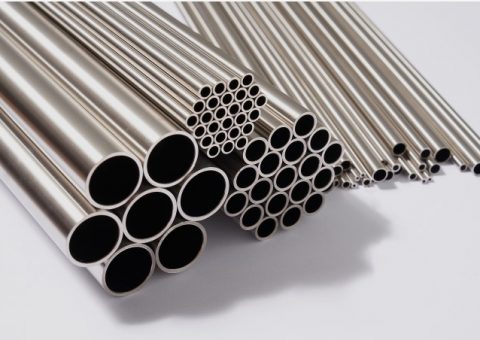
Seamless tube materials represent one of the most critical elements in the design and construction of reliable, safe, and high-performance industrial plants.
Beyond the supply format — coils or bars — it is the choice of alloy that determines tube performance in terms of mechanical strength, chemical compatibility, service life, and regulatory compliance.
For companies operating in highly complex sectors, selecting the right industrial seamless materials means reducing operational risks and optimizing long-term plant performance.
Austenitic Stainless Steels
Among the most widely used seamless tube materials are austenitic stainless steels, supplied both in coils and bars.
Alloys such as AISI 304/304L, AISI 316/316L dual grade, and 6Mo (UNS S31254) provide a well-established balance between corrosion resistance, workability, and mechanical reliability.
These materials are commonly used in process and instrumentation applications thanks to:
Good corrosion resistance in standard industrial environments;
Excellent ductility and formability;
Compatibility with a wide range of fluids and operating conditions.
Duplex and Super-Duplex Steels
When operating conditions become more severe, Duplex and Super-Duplex seamless tubes (Duplex 2205, Super-Duplex SAF 2507) are required.
These materials combine high mechanical strength with excellent resistance to localized corrosion, making them suitable for aggressive environments and high-pressure applications.
Duplex and Super-Duplex seamless alloys are particularly recommended for:
Oil & gas and offshore installations;
Chloride-containing environments;
Applications requiring high structural performance.
Nickel Alloys for Critical Applications
Nickel alloys such as Hastelloy C276 and Monel 400 represent a key category among industrial seamless materials intended for extreme operating conditions.
These materials ensure structural stability and chemical resistance even at high temperatures, elevated pressures, and in the presence of highly corrosive agents.
Nickel alloys are typically used in:
Chemical and petrochemical plants;
High-temperature processes;
Critical applications with stringent safety requirements.
Nickel-Chromium-Molybdenum Alloys for Highly Aggressive Environments
Among advanced seamless tube materials are also Sanicro alloys (Inconel and Incoloy 625/825), a family of high-performance alloys positioned between super-austenitic stainless steels and nickel-based alloys.
These materials are engineered to provide excellent resistance to localized corrosion and strong mechanical performance in particularly aggressive environments.
Sanicro alloys are used in applications where conventional stainless steels are not sufficient, such as chemical plants, oil & gas installations, heat exchangers, and environments containing chlorides, acids, or H₂S
(NACE MR0175 / ISO 15156 and MR0103 / ISO 17495-1), offering a reliable technical solution for severe operating conditions.
Reference Standards and Certifications
The selection of seamless tube materials must always be accompanied by verification of the required standards and certifications.
Specifications such as ASTM A269 and ASTM A213 represent established references for industrial applications.
Internationally, tubes can be supplied in compliance with ASME, DIN, ISO, and EN standards.
For more critical environments, compliance with NORSOK and Saudi Aramco standards is particularly relevant — for which we have supplied over €2 million in materials and more than 200,000 meters of tubing.
Certifications such as PED and AD 2000 W2 confirm suitability for pressure equipment, while third-party approvals from organizations such as TÜV and Lloyd’s Register provide additional assurance of quality and traceability.
Material and Format: An Integrated Choice
The selection of seamless tube materials should always be evaluated together with the supply format — coils or bars.
Depending on the chosen alloy and the specific application, the correct combination of material and format simplifies installation, improves reliability, and ensures compliance with project specifications.
Contact us to identify the most suitable alloy for your plant.
Hai qualche domanda?
Fornitori materiale meccanico, elettrostrumentale ed elettrico per impianti industriali del settore chimico e petrolchimico e dei settori energetici